Level of Education
Technical Program
Time Investment
9 Months
Credits
36
Total Cost
$14,314
Next Starting
November 2026
- Tuition
- $13,860
- Fees
- $90
- Books & Supplies
- $214
- Other Costs
- $150
- Total Program Cost
- $14,314
Program Overview
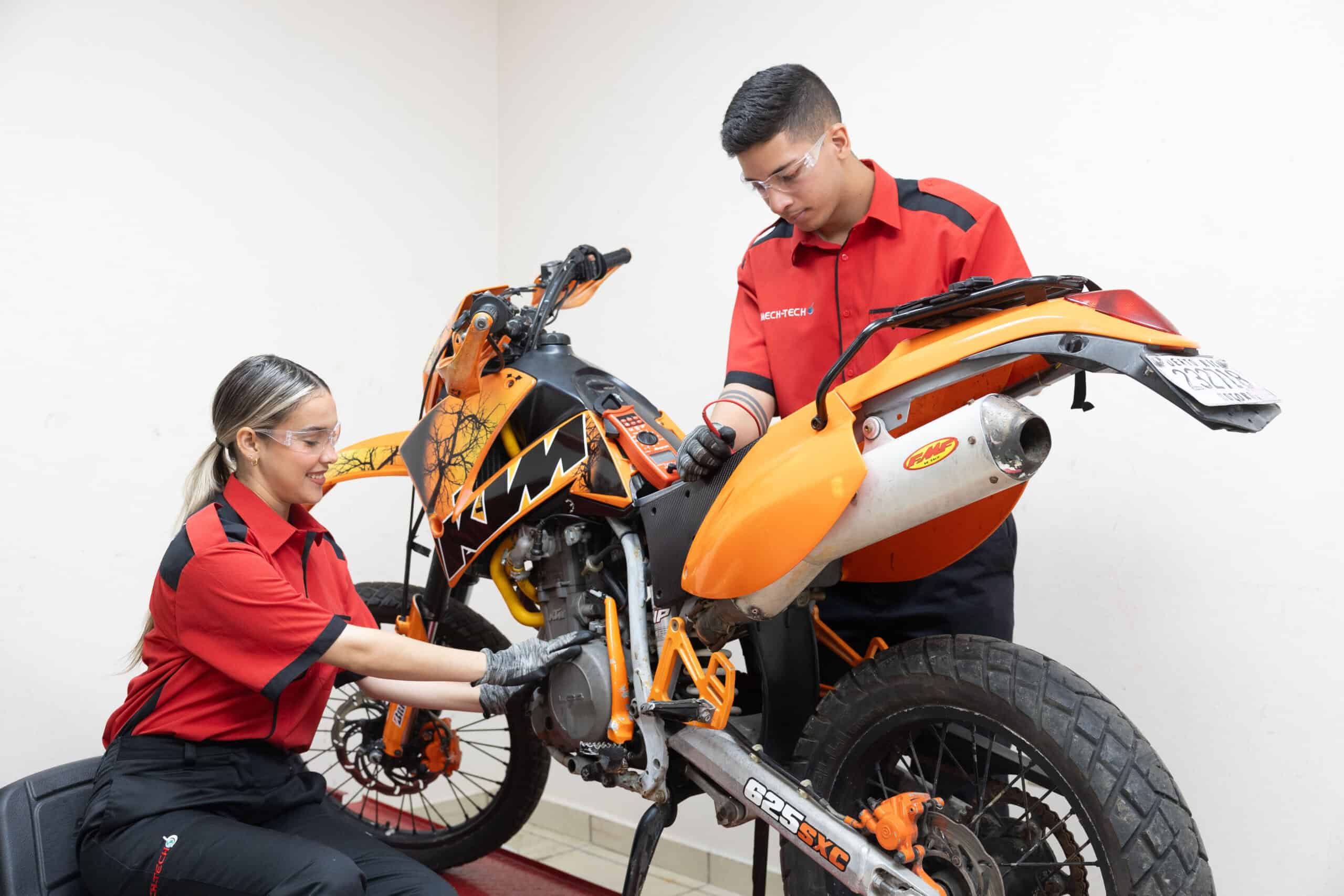
The Motorcycle Mechanics program is designed to give students the technical knowledge and skills required to work as motorcycle repair and maintenance technicians. Coursework covers two-stroke and four-stroke internal combustion engines, motorcycle electrical and electronic systems, lubrication and cooling, transmissions, ignition systems, and accessories, among other areas. The program also covers applications across the industry — street, sport, competition, and touring motorcycles.
Program Objective
The objective of the Motorcycle Mechanics program is to prepare students with the knowledge and skills to perform motorcycle and related-equipment repair and maintenance with a high degree of effectiveness, ready to put their trade to work wherever their services are needed.Employment Opportunities:
- Small Engine Technician
- Motorcycle Repair, Diagnostics & Maintenance Technician
- Motorcycle Accessory Installer & Customizer
What You’ll Learn
Motorcycle Industry and Safety Measures
Provides an overview of the motorcycle industry; students will learn safety measures, including shop safety protocols, proper use of tools and equipment, and personal protective equipment (PPE).
Engine Combustion
Covers the fundamental principles and operation of internal combustion engines used in motorcycles.
Electrical and Electronic Systems
This course introduces students to motorcycle electrical and electronic systems, focusing on both theory and practical applications.
Lubrication and Cooling System
This course introduces students to motorcycle lubrication and cooling systems. It covers the components, functions, and service procedures for engine oil systems, filters, radiators, coolant types, and thermal management devices.

Fuel and Emission Control Systems
Covers the theory, operation, diagnosis, and repair of motorcycle fuel delivery and emission control systems.
E-Bikes
Introduces students to the principles, components, and maintenance of electric bicycles (e-bikes).
Transmissions
Introduces students to the operational principles, components, and maintenance procedures of motorcycle transmission systems.
Brakes, Suspension, and Direction System
Students will understand, diagnose, service, and repair motorcycle brake systems, suspension components, and steering mechanisms.
Accessories
Students will identify and install various types of motorcycle accessories available in the market.